
Neuromodulation
Regulating the Nervous System
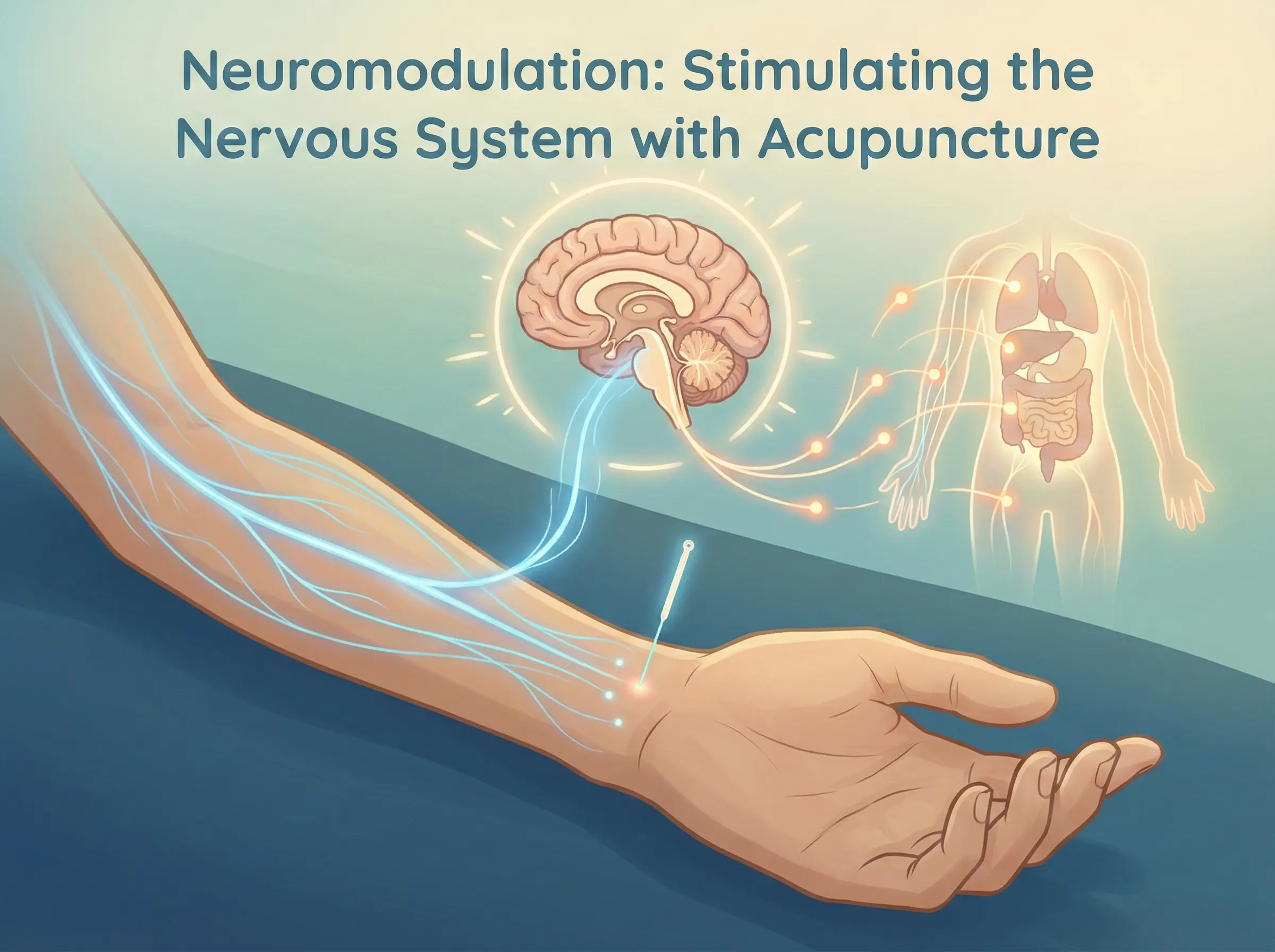
The International Neuromodulation Society states that neuromodulation is the “alteration of nerve activity through targeted delivery of a stimulus such as electrical stimulation to specific neurological sites in the body”. Acupuncture is being recognized as a way to perform this helpful therapy.
Think of it as stimulating the nervous system to promote “balance” or “regulation” – learn more in the article below.

Drew has 25 years of clinical experience treating fertility and pregnancy-related conditions, and has spent 18 years training acupuncturists and other healthcare practitioners across Ontario in Traditional Chinese Medicine techniques — including Naturopathic Doctors & Medical Doctors.
Understanding Neuromodulation
Neuromodulation refers to therapeutic approaches that influence how the nervous system communicates and regulates itself. Rather than forcing change through effort or conscious control, neuromodulation works by gently altering neural signaling patterns to help the body shift out of chronic stress states and into regulation.
This approach is increasingly used in conditions where the nervous system remains biased toward heightened alertness, such as chronic stress, anxiety, sleep disruption, and stress-related physical symptoms. Instead of suppressing symptoms, neuromodulation aims to support the body’s inherent capacity for balance and recovery.
Stress, the Nervous System, and Regulation
In people experiencing long-term stress, the nervous system often becomes biased toward sympathetic (“fight or flight”) dominance. Over time, this can contribute to symptoms such as palpitations, shallow breathing, digestive disturbances, muscle tension, and difficulty sleeping.
Neuromodulation aims to restore balance by supporting parasympathetic (“rest and regulate”) activity and improving nervous system flexibility. This ability to shift appropriately between states of activation and rest is central to long-term resilience.
Heart Rate Variability and Nervous System Health
One of the most widely studied markers of nervous system regulation is heart rate variability (HRV). HRV refers to the natural variation in time between heartbeats and reflects how flexibly the autonomic nervous system responds to stress.
Higher HRV is associated with improved stress resilience, emotional regulation, and cardiovascular health, while lower HRV is commonly seen in states of chronic stress, anxiety, and sleep disturbance. Research examining neuromodulatory interventions has consistently used HRV as an objective marker of autonomic balance (Huang et al., 2013).
Clinical studies suggest that interventions such as acupuncture and targeted nerve stimulation may increase HRV, supporting their role in nervous system regulation.
Acupuncture as a Form of Neuromodulation
Acupuncture is increasingly understood as a form of neuromodulation. Research using functional neuroimaging has demonstrated that acupuncture influences brain regions involved in autonomic control, emotional regulation, and stress processing (Napadow et al., 2009).
These effects help explain why acupuncture often produces changes across multiple systems at once, including improvements in sleep quality, stress tolerance, digestion, and physical tension. Rather than acting as a sedative or stimulant, acupuncture appears to support adaptive nervous system responses.
Neuromodulation and Autonomic Regulation
Modern neuromodulatory approaches often focus on enhancing parasympathetic activity while reducing excessive sympathetic activation. Non-invasive neuromodulation techniques, including vagus nerve stimulation, have been shown to influence autonomic regulation and are increasingly studied for stress-related conditions (Redgrave et al., 2018).
When integrated with acupuncture, these approaches provide complementary input to the nervous system, supporting both localized neural pathways and whole-body regulatory processes.
Clinical Implications
For individuals who feel “stuck” in a state of heightened alertness—whether experienced as anxiety, poor sleep, digestive upset, palpitations, or chronic tension—neuromodulation offers a physiological pathway toward regulation.
By working at the level of nervous system signaling, these therapies do not rely solely on cognitive strategies or willpower. Instead, they support the body’s ability to relearn balance over time.
Conclusion
The nervous system is adaptable. Persistent symptoms do not indicate failure or permanent damage, but rather a system that has been under sustained demand.
Neuromodulation, including acupuncture and related therapies, supports the nervous system’s capacity to regulate, recover, and respond more flexibly to stress. For many people, this approach offers a grounded, evidence-informed path toward improved resilience and well-being.
References
Napadow, V., Dhond, R., Park, K., Kim, J., Makris, N., Kwong, K. K., Harris, R. E., Purdon, P. L., Kettner, N., & Hui, K. K. S. (2009). Time-variant fMRI activity in the brainstem and higher structures during acupuncture. Human Brain Mapping, 30(2), 469–482. https://doi.org/10.1002/hbm.20503
Huang, W., Pach, D., Napadow, V., Park, K., Long, X., Neumann, J., Maeda, Y., Liang, F., & Witt, C. M. (2013). Characterizing acupuncture stimuli using heart rate variability analysis. Autonomic Neuroscience, 179(1–2), 90–97. https://doi.org/10.1016/j.autneu.2013.05.002
Redgrave, J., Day, D., Leung, H., Laud, P. J., Ali, A., Lindert, R., & Majid, A. (2018). Safety and tolerability of transcutaneous vagus nerve stimulation in humans: A systematic review. Brain Stimulation, 11(6), 1225–1238. https://doi.org/10.1016/j.brs.2018.08.010