
Vagus Nerve Stimulation: A Whole - Body Approach to Stress, Anxiety, and Sleep Regulation
Vagus nerve stimulation treatments are offered by Drew at his clinic.
You’ve been feeling stressed.
After consulting with Dr. Google, you’ve come across the vagus nerve and how it might be affecting your sleep, digestion and anxiety levels.
This article explains everything you need to know about how vagus nerve dysregulation may be the reason behind your current stress symptoms.
Why the Vagus Nerve Is Getting So Much Attention
Many people I work with describe a similar experience: they feel tense, anxious, wired, or exhausted — even when life doesn’t seem especially stressful on the surface.
They may struggle with anxiety, poor sleep, digestive issues, palpitations, or a constant sense that their body never fully relaxes. Often, medical testing comes back “normal,” yet the symptoms persist. This can feel frustrating and confusing, especially when you’re doing everything you’re told you should be doing. Research increasingly suggests that these patterns may reflect dysregulation of the autonomic nervous system rather than isolated organ dysfunction (Cheng et al., 2022; Zhao & Jiang, 2023).
Over the past several years, increasing attention has been placed on the vagus nerve and its role in regulating how the body responds to stress. The vagus nerve plays a central role in parasympathetic activity and autonomic flexibility — the nervous system’s ability to shift between activation and recovery (Bonaz et al., 2021; Owens, 2020). Research is helping us better understand that many chronic symptoms are not isolated problems, but expressions of a nervous system that has difficulty shifting out of high alert.
Vagus nerve stimulation is one approach that aims to support this regulatory system directly. When combined with acupuncture and whole-body treatment, it offers a way to help the body move toward a calmer, more balanced state — not by forcing relaxation, but by supporting the pathways that allow it to occur naturally (Kim et al., 2022; Sclocco et al., 2019).
This article explains:
-
What the vagus nerve is and why it matters
-
How vagus nerve stimulation works
-
Why symptoms such as anxiety, sleep disruption, and digestive issues are often connected
-
How in-clinic vagus nerve stimulation and acupuncture can work together as a whole-body approach
What Is the Vagus Nerve?
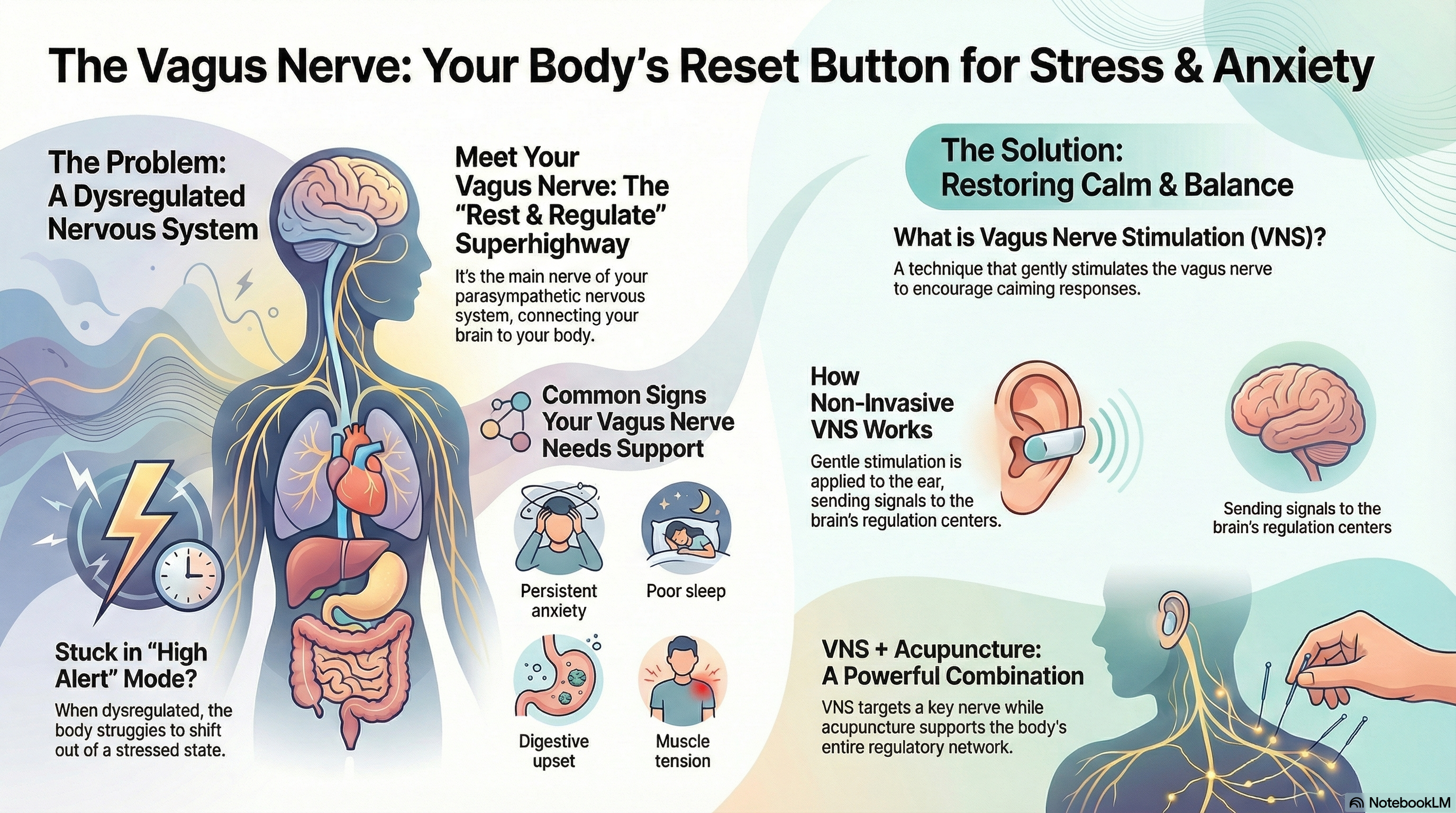
The vagus nerve is the primary nerve of the parasympathetic nervous system, often described as the “rest and regulate” side of the nervous system. It plays a central role in helping the body slow down, recover, and maintain internal balance (Bonaz et al., 2021).
The vagus nerve connects the brain to many major systems in the body, including the:
-
Heart
-
Lungs
-
Digestive tract
-
Immune system
Through these connections, it influences heart rate, breathing patterns, digestion, inflammation, and emotional regulation (Bonaz et al., 2021). Because it travels from the brain down through the chest and abdomen, it’s sometimes referred to as the “wandering nerve.”
When the vagus nerve is functioning well, the body can move smoothly between states of activity and rest. After stress passes, the nervous system settles. Breathing slows, digestion resumes, and muscles release tension.
When this system is underactive or overwhelmed, the body may remain stuck in a heightened state of alert — even when there is no immediate threat.
This overall responsiveness is often referred to as vagal tone. Healthy vagal tone reflects the nervous system’s ability to adapt, recover, and regulate itself appropriately. Reduced vagal tone, often reflected by lower heart rate variability (HRV), has been observed in individuals with anxiety and insomnia (Cheng et al., 2022; Zhao & Jiang, 2023).
Signs the Vagus Nerve May Be Dysregulated
Because the vagus nerve influences multiple systems, symptoms of dysregulation are often widespread rather than isolated. Many people are surprised to learn that symptoms they’ve been treating separately may actually be connected.
Common signs associated with vagus nerve dysregulation include:
-
Persistent anxiety or nervousness
-
A sense of being “on edge” or unable to fully relax
-
Heart palpitations or chest tightness
-
Difficulty falling asleep or frequent waking during the night
-
Digestive symptoms such as bloating, nausea, or irregular bowel habits
-
Headaches, jaw tension, or neck and shoulder tightness
-
Low stress tolerance or feeling easily overwhelmed
-
Frequent illness or slow recovery
These symptoms often travel together because they are regulated by overlapping nervous system pathways, including autonomic and vagal signaling (Bonaz et al., 2021). Rather than being separate problems, they may reflect a common underlying issue: a nervous system that is struggling to downshift.
Understanding this connection can be an important step toward choosing treatments that address the pattern, not just the symptom.
What Is Vagus Nerve Stimulation?
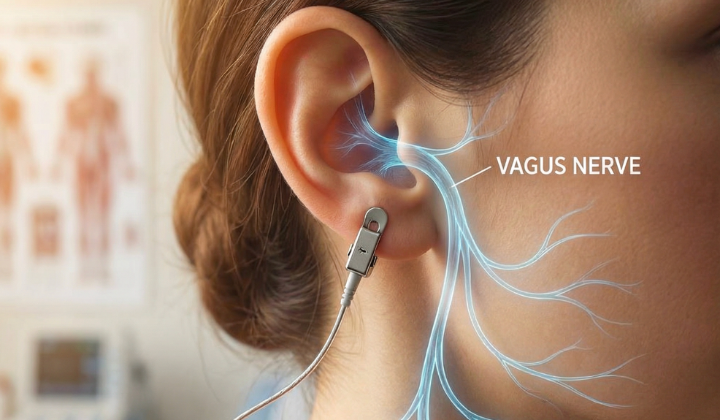
Vagus nerve stimulation (VNS) refers to techniques designed to support parasympathetic activity by gently stimulating the vagus nerve. The goal is not to suppress symptoms, but to help the nervous system re-establish more flexible, balanced regulation.
In medical settings, implanted vagus nerve stimulators have been used for conditions such as epilepsy and depression. However, many people are now familiar with non-invasive or transcutaneous vagus nerve stimulation (taVNS), which does not involve surgery (Kim et al., 2022).
This form of stimulation typically targets a small branch of the vagus nerve accessible at the ear. Gentle electrical stimulation is applied externally, sending signals through the nerve to areas of the brain involved in stress regulation (Sclocco et al., 2019).
When used appropriately, this type of stimulation may:
-
Encourage parasympathetic activity (Kim et al., 2022)
-
Reduce sympathetic overdrive -fight-or-flight response (Clancy et al., 2014; Bretherton et al., 2019)
-
Support calmer breathing and heart rate patterns (Kim et al., 2022)
-
Improve stress resilience over time (Bretherton et al., 2019)
In a clinical setting, vagus nerve stimulation is often combined with acupuncture to support the nervous system from both a direct neural pathway and a whole-body regulatory perspective.
What In-Clinic Vagus Nerve Stimulation Involves
In-clinic vagus nerve stimulation is designed to be gentle, supportive, and calming, not intense or invasive. Most people are surprised by how subtle the experience feels. (Kim et al., 2022).
During a session, stimulation is typically applied at the ear using a small external device. The intensity is carefully adjusted so that the sensation is noticeable but comfortable — often described as a light tingling or rhythmic pulsing. Sessions usually last between 20 and 45 minutes, depending on the individual and how the treatment is combined with acupuncture.
Common experiences during treatment include:
-
Slower, deeper breathing
-
A sense of mental quiet or emotional settling
-
Physical relaxation, particularly in the neck, jaw, or shoulders
-
A feeling of “coming down” from a state of constant alertness
Some people notice a calming effect during the first session, while others experience more gradual changes over a series of treatments. Because the nervous system responds differently from person to person, stimulation is always adjusted based on individual sensitivity and response.
While some clients also use simple techniques at home between visits, in-clinic care allows for:
-
Proper placement and stimulation parameters
-
Monitoring of nervous system response
-
Integration with body acupuncture for a broader regulatory effect
Why Combine Vagus Nerve Stimulation with Acupuncture?
Vagus nerve stimulation works through a specific neural pathway, while acupuncture works through the entire regulatory network of the body. When used together, they support the nervous system from complementary directions.
Acupuncture has long been used to help regulate stress responses, calm the mind, and support sleep and digestion. From a modern perspective, acupuncture influences the autonomic nervous system, helping to reduce sympathetic over-activation and promote parasympathetic balance. (Hamvas et al., 2023)
Vagus nerve stimulation adds another layer by providing direct input to a key nerve involved in calming and recovery. Rather than replacing acupuncture, it reinforces the same message through a different channel.
In practice, this combination allows for:
-
Localized nervous system signaling through vagus nerve stimulation
-
Global regulation through body acupuncture points
-
A more complete shift out of fight-or-flight and into restorative states
Many people find that this integrated approach feels more effective than addressing symptoms individually. Instead of focusing only on anxiety, sleep, or digestion, treatment supports the underlying regulatory system that connects them.
A Traditional Chinese Medicine Perspective on Nervous System Regulation
Traditional Chinese Medicine has long recognized that emotional strain, chronic stress, and prolonged worry can disrupt the body’s internal balance. While the language differs from modern neuroscience, the underlying principles are remarkably aligned.
In Chinese medicine, symptoms such as anxiety, insomnia, digestive upset, palpitations, and tension are often understood as patterns involving the Heart, Liver, and Spleen systems, as well as the state of the Shen (spirit or mind). These patterns reflect not just emotional stress, but how the body processes and recovers from it.
Rather than treating each symptom in isolation, TCM focuses on restoring coordination and flow between systems. Acupuncture and herbal medicine are used to:
-
Settle overactivity
-
Support nourishment and recovery
-
Improve the body’s ability to adapt to stress
Modern vagus nerve research mirrors this perspective by emphasizing regulation rather than suppression (Bonaz et al., 2021). From both viewpoints, healing is not about forcing calm, but about helping the body remember how to return to balance on its own.
Combining traditional acupuncture with modern vagus nerve stimulation allows these two frameworks to work together — honouring centuries of clinical insight while incorporating contemporary understanding of the nervous system.
Who This Approach Is Most Helpful For
An integrated approach using vagus nerve stimulation alongside acupuncture is especially helpful for people whose symptoms reflect ongoing nervous system strain, rather than a single isolated issue.
This may include individuals who experience:
-
Chronic or recurring anxiety, especially when it feels physical rather than purely mental (Cheng et al., 2022).
-
Difficulty falling asleep, frequent waking, or non-restorative sleep (Zhao & Jiang, 2023).
-
Digestive symptoms that worsen during periods of stress (Bonaz et al., 2021).
-
Heart palpitations, chest tightness, or a persistent sense of internal tension
-
Headaches, jaw clenching, neck and shoulder tension, or stress-related pain
-
A feeling of being “wired but exhausted” or easily overwhelmed
-
Limited improvement from strategies that focus on symptoms alone
This approach is also well suited for people who are already doing meaningful work — such as psychotherapy, lifestyle changes, or stress management — but feel that their body hasn’t quite caught up yet.
By supporting regulation at the level of the nervous system, treatment can help create the internal conditions needed for those other efforts to take hold more fully.
Supporting the Body’s Capacity to Regulate and Recover
The nervous system is not static. It is designed to adapt, respond, and recover — even after long periods of stress. When symptoms persist, it does not mean the system is broken; it often means it has been working too hard for too long.
Vagus nerve stimulation and acupuncture both aim to support the body’s innate ability to regulate itself. Rather than overriding symptoms or forcing relaxation, this approach works with the body’s existing pathways to encourage steadiness, resilience, and balance over time.
For many people, the most meaningful changes are subtle at first:
-
Better sleep quality
-
Faster recovery after stressful days
-
Reduced intensity or frequency of physical stress symptoms
-
A greater sense of calm and internal stability
Over time, these small shifts can add up to meaningful improvements in daily life.
If you’re exploring ways to support stress, anxiety, sleep, or stress-related physical symptoms, a whole-body approach that addresses nervous system regulation may offer a valuable path forward.
References
Bonaz, B., Sinniger, V., & Pellissier, S. (2021). Therapeutic potential of vagus nerve stimulation. Frontiers in Neuroscience, 15, 650971.
Bretherton, B., Atkinson, L., Murray, A., et al. (2019). Effects of transcutaneous vagus nerve stimulation in individuals with anxiety disorders: A pilot study. Brain Stimulation, 12(5), 1138–1140.
Cheng, Y.-C., Su, M.-I., Liu, C.-W., et al. (2022). Heart rate variability in patients with anxiety disorders: A systematic review and meta-analysis. Psychiatry and Clinical Neurosciences, 76(7), 292–302.
Clancy, J. A., et al. (2014). Non-invasive vagus nerve stimulation in healthy humans reduces sympathetic nerve activity. Brain Stimulation, 7(6), 871–877.
Hamvas, S. Z., et al. (2023). Effects of acupuncture on autonomic nervous system: A systematic review and meta-analysis. Complementary Therapies in Medicine, 72, 102905.
Kim, A. Y., et al. (2022). Safety of transcutaneous auricular vagus nerve stimulation: A systematic review and meta-analysis. Scientific Reports, 12, 22055.
Owens, A. P. (2020). The role of heart rate variability in digital biomarkers. Frontiers in Neuroscience, 14, 582145.
Sclocco, R., et al. (2019). The influence of respiration on brainstem response to auricular vagus nerve stimulation. Brain Stimulation, 12(4), 911–921.
Zhang, S., et al. (2024). Transcutaneous auricular vagus nerve stimulation for chronic insomnia disorder: A randomized clinical trial. JAMA Network Open.
Zhao, W., & Jiang, B. (2023). Heart rate variability in insomnia disorder: A systematic review. Sleep and Breathing, 27, 1309–1313.