
Understanding Anxiety: When the Alarm System Stays Sensitive
Anxiety is often misunderstood.
It’s not simply “worrying too much.” It is not a character flaw. And it’s not something that can always be resolved by thinking differently.
Anxiety is a nervous system state.
It’s what happens when the body’s internal alarm system becomes overly sensitive — responding strongly even when the threat is small, uncertain, or not immediately present.


Drew has 25 years of clinical experience treating fertility and pregnancy-related conditions, and has spent 18 years training acupuncturists and other healthcare practitioners across Ontario in Traditional Chinese Medicine techniques — including Naturopathic Doctors & Medical Doctors.
What is Anxiety?
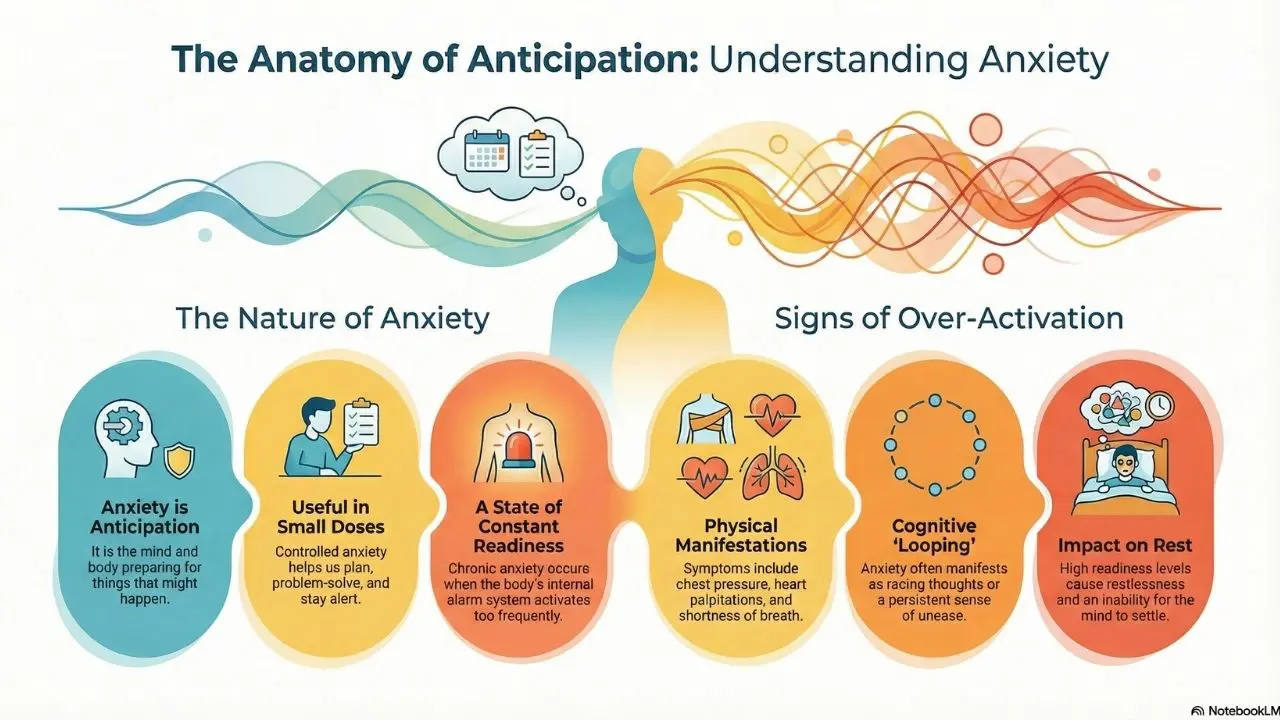
At its core, anxiety is anticipation. It’s the mind and body preparing for something that might happen.
In small doses, this is useful. It helps us plan, problem-solve, and stay alert.
But when the alarm system activates too frequently or too intensely, the body begins to live in a state of constant readiness.
You may notice:
- A persistent sense of unease
- Difficulty relaxing, even when nothing is urgent
- Racing or looping thoughts
- A feeling of pressure in the chest
- Palpitations or awareness of your heartbeat
- Shortness of breath
- Restlessness or inability to sit still
- Trouble falling asleep because your mind won’t settle
Some people describe anxiety as feeling “on edge.” Others describe it as a background hum that never fully quiets.
Generalized Anxiety Disorder
Generalized Anxiety Disorder (GAD) is a term used when worry becomes excessive, persistent, and difficult to control. People with GAD often describe feeling as though their mind is always scanning ahead — looking for what could go wrong next.
It may not feel dramatic. It may simply feel constant.
There can be an underlying tension that rarely turns off. Even positive events may carry a layer of anticipation or “what if.” This ongoing cognitive load is exhausting. And over time, it becomes physical.
Panic Attacks: When the Alarm Surges
Panic attacks are different.
Rather than a steady hum, panic feels like a sudden surge. The heart races. Breathing becomes rapid or shallow. There may be dizziness, chest tightness, sweating, or a sense of impending danger.
For many people, panic attacks feel out of nowhere.
In reality, they are the nervous system misinterpreting internal signals as threats. A small shift in breathing, a spike in stress hormones, or even fatigue can trigger the body’s full emergency response.
The experience is intensely uncomfortable — but not dangerous. And importantly, panic attacks are treatable.
Understanding that panic is a misfiring alarm (not a sign that something catastrophic is happening) is often the first step toward reducing their frequency.
The Physical Side of Anxiety
Anxiety is not just mental. It is profoundly physical.
When the nervous system detects a potential threat, it activates the same pathways used in real emergencies. Heart rate increases. Muscles prepare for action. Blood flow shifts. Digestion slows.
If this activation happens repeatedly, the body may begin reacting to everyday stressors as though they are urgent.
You might notice your heart racing during a normal conversation. Or tension rising before a routine appointment. Or waking in the middle of the night already alert.
The body is not malfunctioning. It’s simply trying to protect you — just a little too enthusiastically.
The Anxiety–Sleep Cycle
One of the most common patterns I see is the connection between anxiety and sleep disruption.
When anxiety increases, sleep becomes lighter and more fragmented. When sleep becomes disrupted, anxiety becomes more pronounced the next day.
This creates a vicious cycle.
You may fall asleep exhausted, only to wake at 2 or 3 a.m. with your mind immediately scanning for problems. Or you may lie awake anticipating the next day. Over time, evenings begin to feel tense instead of restorative.
Breaking this cycle often requires addressing both sides: calming the nervous system during the day and supporting consistent sleep rhythms at night.
Long-Term Effects of Ongoing Anxiety
When anxiety remains unaddressed, it can begin to affect multiple systems.
– Digestive patterns may change.
– Muscle tension may become chronic.
– Headaches may become more frequent.
– Emotional resilience may decrease.
Over months or years, living in a heightened state of vigilance can feel exhausting. Some people adapt by pushing through. Others withdraw. Many assume this is simply how they’re wired.
But nervous system patterns are not fixed. They are modifiable states.
A Reassuring Perspective
Anxiety often feels unpredictable. But physiologically, it follows patterns.
When the nervous system receives consistent signals of safety — through breathing regulation, sleep stabilization, physical calming strategies, and appropriate therapeutic support — its sensitivity can gradually decrease.
This does not happen overnight. But it does happen.
If you recognize yourself in the symptoms described above — persistent worry, panic episodes, disrupted sleep, physical restlessness — it may be helpful to approach anxiety from a regulatory perspective rather than a purely cognitive one.
You do not have to eliminate every stressor in your life to feel calmer. You may simply need support in helping your nervous system recalibrate.
If anxiety has been affecting your sleep, digestion, physical comfort, or overall sense of ease, booking an appointment can be a meaningful next step. Together, we can assess how your system is functioning and develop a structured plan to help it regain steadiness.
Living in a constant state of alertness is not the baseline you have to accept.