
Heart Rate Variability: What Does It All Mean?
You've heard about HRV but what does it mean when it comes to your stress levels?
Understanding your HRV might be a helpful tool when it comes to your stress – and how best to manage it. In this article, you’ll learn about what HRV is, why it might help to know more about your ability to adapt to stress and how best to monitor it with some of the most common HRV monitors on the market.

Heart Rate Variability (HRV): Understanding Stress, Recovery, and Nervous System Health
Heart Rate Variability (HRV) refers to the natural variation of time between heartbeats (measured in milliseconds). Rather than measuring how fast the heart is beating per minute, HRV measures the time between beats and can reflect how balanced the nervous system is when responding to internal and external demands. A more adaptable nervous system tends to show greater variability between beats (a higher HRV), while a system under persistent strain often shows reduced variability (a lower HRV). Simply put, a heart under constant stress will beat faster – reducing the amount of time between beats for longer periods, making it less “variable” and ultimately, resulting in a lower HRV.
In the context of stress, anxiety, and sleep disruption, HRV has become a useful physiological marker of nervous system load and recovery. It is not a diagnostic tool, but when viewed over time, HRV can offer meaningful insight into how the body is responding to stress and whether recovery processes are improving.
How HRV Relates to the Nervous System
HRV is closely linked to the balance between the sympathetic (“fight or flight”) and parasympathetic (“rest and regulate”) branches of the autonomic nervous system. Higher resting HRV is generally associated with stronger parasympathetic activity and greater resilience, while persistently low HRV may reflect ongoing sympathetic dominance, poor sleep, illness, or emotional strain.
For many people, changes in HRV often appear before noticeable improvements in symptoms such as sleep quality, digestion, or emotional regulation. This makes HRV particularly useful for tracking process, not just outcomes.
Collecting and Using HRV Data in a Helpful Way
One of the most important principles with HRV is how the data is collected. Measurements taken during sleep are considered the most reliable because they are least influenced by movement, posture, or conscious activity.
When using HRV data to support health:
-
Focus on trends over weeks, not daily fluctuations
-
Compare readings to your own baseline, not to others
-
Notice how HRV responds to sleep quality, illness, stress, and recovery
-
Avoid using HRV as a performance score or judgment tool
For people with anxiety or insomnia, passive overnight tracking tends to be far more helpful than frequent spot-checks, which can increase stress.
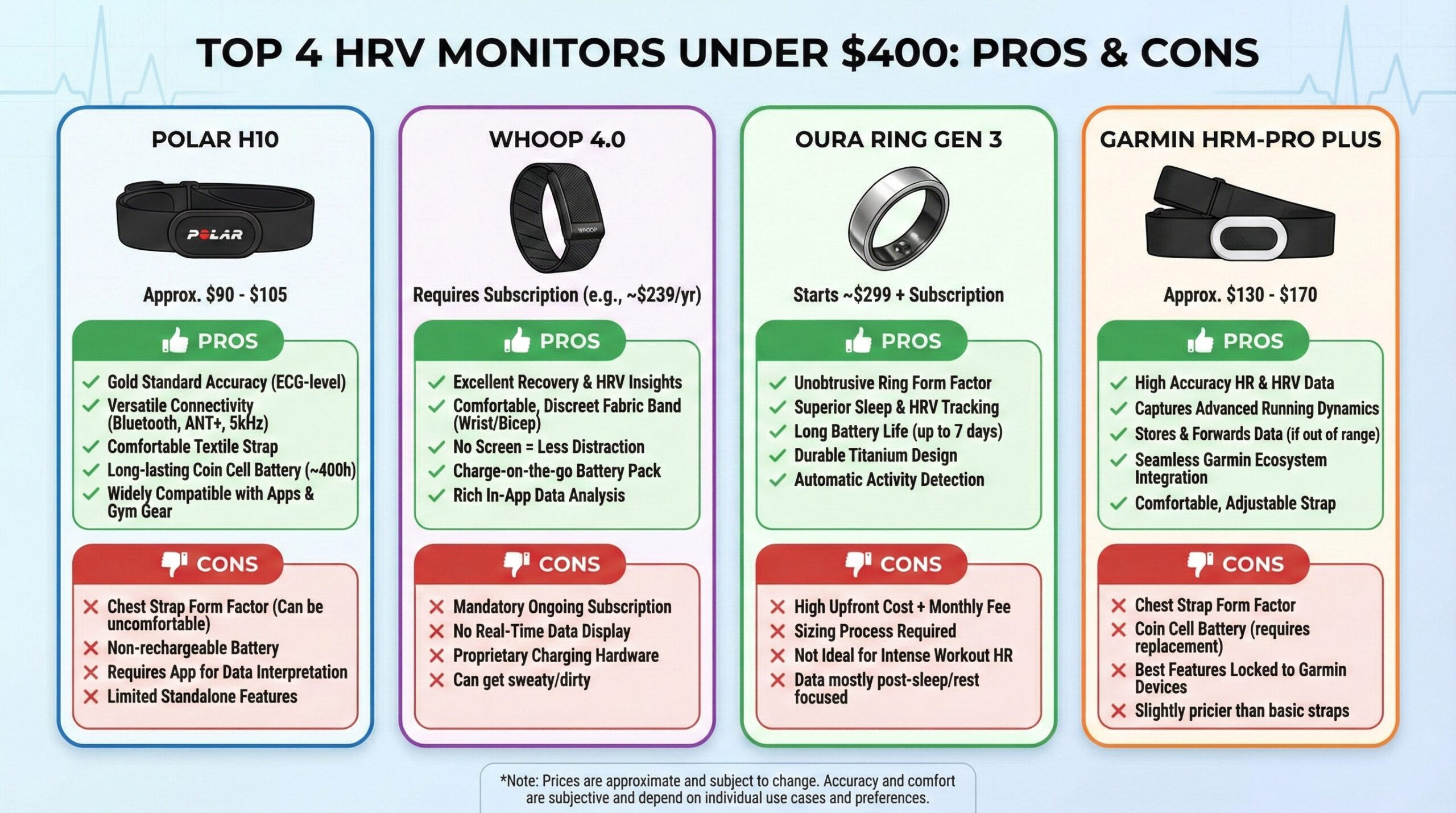
What Kind of Research Uses HRV?
In research settings, HRV is used to study:
-
Chronic stress and burnout
-
Anxiety and mood disorders
-
Sleep quality and circadian rhythm disruption
-
Cardiovascular health
-
Inflammation and immune regulation
-
Recovery from illness and injury
HRV is valued because it offers a non-invasive window into autonomic regulation, making it useful across many health conditions without relying on subjective reporting alone.
HRV, Acupuncture, and Vagus Nerve Stimulation
Growing research suggests that interventions targeting nervous system regulation can influence HRV. Acupuncture has been shown in multiple studies to increase parasympathetic activity and improve HRV, particularly when points associated with calming and autonomic regulation are used.
Similarly, vagus nerve stimulation (including non-invasive approaches) has been associated with improvements in HRV, reflecting enhanced parasympathetic tone. These findings support a broader understanding of acupuncture and neuromodulation as regulatory rather than symptomatic therapies, aimed at improving the nervous system’s capacity to adapt.
A Helpful Way to Think About HRV
HRV is best understood as a conversation with the nervous system, not a score to optimize. Improvements often happen gradually, and stability itself can be a sign of progress.
When paired with supportive care — including sleep regulation, stress reduction strategies, acupuncture, and lifestyle adjustments — HRV can help people see that change is happening, even when symptoms fluctuate.
The goal isn’t perfect balance. It’s greater resilience over time.