
Nutrition, Supplementation, and the Stress Response
Proper nutrition and supplementation are pivotal for better anxiety, sleep & stress.
When someone is struggling with anxiety, poor sleep, or chronic stress, the conversation often turns toward the mind. But long before stress becomes a thought, it’s a biological process.
Every stress response requires energy. Every calming response requires nutrients.

The nervous system does not run on willpower. It runs on chemistry. When we look at stress, anxiety, and insomnia through a nutritional lens, we are asking a simple question:
Is the body receiving the building blocks it needs to regulate itself properly?
Stress Is Metabolically Demanding
Chronic stress increases the body’s demand for magnesium, B vitamins, amino acids, and omega-3 fatty acids. Cortisol production, neurotransmitter synthesis, and inflammatory regulation all require micronutrients.
Imagine trying to build a house during a storm while also running low on materials. The structure may hold — but strain accumulates.
In clinical practice, this often looks like:
- Heightened reactivity to small stressors
- Increased muscle tension
- Light or fragmented sleep
- Afternoon crashes followed by second-wind alertness at night
Research increasingly supports the connection between nutrient status and stress regulation. For example, magnesium supplementation has been shown to reduce subjective anxiety in individuals with mild-to-moderate symptoms (Boyle et al., 2017; Boyle et al., 2022 update review). Magnesium also plays a role in NMDA receptor regulation and GABA activity — systems involved in calming neural excitability.
Many patients are surprised to learn that tension, jaw clenching, and nighttime restlessness may partly reflect magnesium insufficiency.
The Role of Blood Sugar Stability
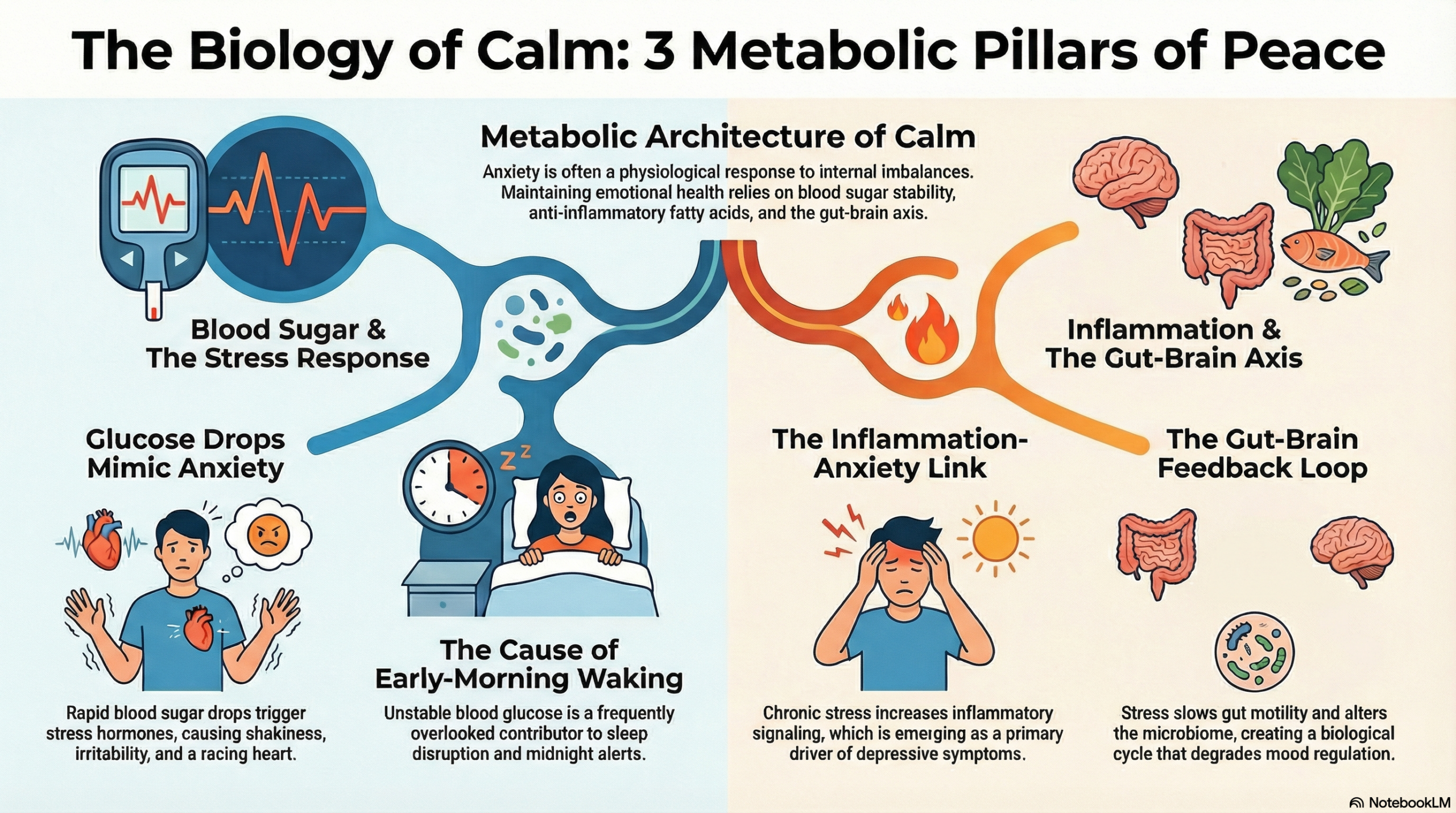
One of the most overlooked contributors to anxiety and sleep disruption is unstable blood glucose.
When blood sugar drops rapidly — even mildly — the body releases stress hormones to correct it. This can produce symptoms that feel like anxiety: shakiness, irritability, racing heart, or early-morning waking.
A common scenario I see: someone wakes at 3–4 a.m. with their mind racing. Often, this coincides with overnight blood sugar dips that trigger a small cortisol surge.
Stabilizing blood sugar through balanced meals — combining protein, fibre, and healthy fats — can reduce these nighttime stress signals.
A 2019 review in Nutrients highlighted the relationship between glycemic variability and mood instability, suggesting that blood sugar fluctuations may influence emotional regulation (Benton et al., 2019).
Food becomes less about restriction and more about rhythm.
Omega-3 Fatty Acids and Inflammation
Chronic stress can increase inflammatory signalling. Emerging evidence links low-grade inflammation with anxiety and depressive symptoms.
Omega-3 fatty acids — particularly EPA — have been studied for their role in modulating inflammatory pathways and supporting mood regulation. A 2018 meta-analysis found that omega-3 supplementation was associated with reduced anxiety symptoms, particularly at higher EPA doses (Su et al., 2018).
Patients often describe subtle changes: less internal agitation, fewer emotional spikes, improved stress tolerance.
Gut Health and Emotional Regulation
The gut and brain communicate constantly through neural, immune, and hormonal pathways — often referred to as the gut–brain axis.
Under chronic stress, digestive patterns shift. Motility slows or becomes irregular. The gut microbiome may change. This can feed back into mood regulation.
Recent research examining probiotic and prebiotic interventions suggests certain strains may modestly reduce anxiety symptoms and perceived stress (Nikolova et al., 2021; Wallace & Milev, 2017 with 2020 updates).
In practical terms, improving gut health may improve stress resilience.
This might involve:
- Increasing dietary fibre gradually
- Supporting microbial diversity
- Reducing highly processed foods
- Considering targeted probiotic support
Again, the goal is not perfection. It’s aiming for stability.
Targeted Supplementation
There is growing research supporting the role of specific nutrients in stress and sleep regulation, including:
- Magnesium glycinate or threonate
- L-theanine for calming alertness
- Glycine before bed to support sleep onset
- Vitamin D in individuals who may be deficient
A 2020 review in Nutrients noted that micronutrient supplementation may reduce perceived stress in individuals with suboptimal nutrient status (Pouteau et al., 2020).
However, supplementation is most effective when personalized. More is not always better.
A Realistic Perspective
Diet and supplementation rarely eliminate stress entirely. They create a more stable physiological foundation.
Think of them as strengthening the wiring of the nervous system. When the wiring is stable, signals are less likely to spark unpredictably.
For someone experiencing anxiety and insomnia, this might mean:
- Fewer 3 a.m. awakenings
- Less physical tension during difficult conversations
- Greater recovery after a stressful week
Subtle improvements compound…making for less noticeable symptoms of anxiety and stress.
Integration and Individualization
Nutrition and supplementation are not replacements for therapy, acupuncture, or medical care when needed. They are foundational supports.
For individuals dealing with chronic stress patterns, evaluating diet, nutrient status, and metabolic stability can be a powerful adjunct to nervous system–focused treatment.
The body regulates best when it is properly nourished.
Getting Help With Drew
If your nervous system has been in overdrive for some time, that does not mean this is your permanent state. Adaptability can be rebuilt. If you’re experiencing ongoing stress, anxiety, insomnia, or stress-related digestive symptoms, I encourage you to book an appointment.
Together, we can evaluate how your system is functioning and create a structured plan to help it regain flexibility and resilience.
References
Benton, D., et al. (2019). The influence of glycemic variability on mood and cognition. Nutrients.
Boyle, N. B., et al. (2017; 2022 review). Magnesium supplementation and subjective anxiety. Nutrients.
Nikolova, V. L., et al. (2021). Gut microbiota and anxiety disorders: Systematic review. Journal of Affective Disorders.
Pouteau, E., et al. (2020). Multivitamin and mineral supplementation and perceived stress. Nutrients.
Su, K. P., et al. (2018). Omega-3 fatty acids in anxiety disorders: Meta-analysis. JAMA Network Open.