
So you’re getting ready for your FET, and you want to do everything possible to make this work — I get it, this is a very big deal with months of medications. ultrasounds and tears culminating in this one day.
My guess is you’ve already spent time in fertility forums, reading what worked for other people. And even though a small part of your brain is saying “this can’t possibly be true,” you’re not willing to leave any “maybes” on the table — not with stakes like these.

In this article, I go through the weird, the wild, and the potentially helpful — everything people commonly do to prepare for an embryo transfer — along with the real science behind why some of these “myths” became so popular in the first place.
Bottom line: as I do with all my clients, I want you to feel as prepared as possible for this big day. Read through everything here, and decide what feels right for you.
TL;DR
- The single most important truth: there is no magic food, body position, or ritual that will make an embryo stick — the biggest evidence-backed wins are keeping gently active (NOT bed rest), managing stress, eating a Mediterranean-style diet, ensuring proper supplementation, sleeping well, and following basic early-pregnancy food-safety precautions.
- Most beloved folk rituals (McDonald’s fries, pineapple core, warm socks, pomegranate juice, Brazil nuts) are harmless-but-unproven — enjoy them for comfort and a sense of control, but not because they change biology.
- One folk-adjacent remedy — a daily beetroot, watermelon, and ginger juice — actually has real randomized trial data behind it, not just wellness-blog reasoning. Still preliminary, but worth knowing about.
- A few widely-repeated beliefs are actively outdated or counterproductive: strict bed rest may slightly lower implantation rates, “detox” regimens and high-intensity restrictions aren’t necessary, and egg-quality supplements started only at transfer are too late — the goal is calm, gentle normalcy.
Key Findings
What actually helps (evidence-based): stay gently active (skip bed rest); manage stress with structured mind-body programs; eat a Mediterranean/anti-inflammatory diet; correct vitamin D deficiency and take folate; protect sleep; avoid alcohol and keep caffeine low; follow early-pregnancy food-safety rules.
Promising but preliminary: a daily beetroot, watermelon, and ginger juice from transfer day to pregnancy test, based on one well-designed randomized trial.
What’s harmless-but-unproven (do it for comfort): pineapple core, McDonald’s fries, warm socks, pomegranate juice, Brazil nuts (1–2/day max), lucky charms, talking to the embryo, “sticky vibes.”
What’s outdated or potentially counterproductive: strict bed rest, total inactivity, intense abdominal/high-impact exercise, hot tubs/saunas/hot yoga, heating pads on the abdomen, castor oil packs during the two-week wait, starting CoQ10/DHEA/melatonin only at transfer, overdoing Brazil nuts (selenium toxicity), and — as a precaution — orgasm/intercourse in the first days after transfer.
PART 1: The Rituals, the Trends, and the Things People Swear By
McDonald’s French fries (“fertility fries”). Perhaps the most iconic ritual: patients grab fries on the way home from transfer.
Origin: the belief traces to legitimate advice that salty/high-sodium, high-protein foods can help manage or prevent ovarian hyperstimulation syndrome (OHSS) after egg retrieval — a real complication involving fluid shifts. Fertility forums suggest the ritual began at a New Jersey clinic more than a decade ago. That advice morphed into a transfer-day tradition, but it makes no biological sense post-transfer (OHSS risk is around retrieval, not transfer). On Reddit’s r/IVF and Fertility Network UK forums, patients openly call it superstition (“we know realistically it didn’t do anything, we still call the baby our lil fry”). On TikTok, viral videos show couples eating fries in the McDonald’s parking lot with friends and family joining in solidarity.
Verdict: pure superstition with a kernel of misapplied real science. Harmless — enjoy them.

Pineapple core (one ring/slice a day for 5 days, starting day of transfer). The theory: pineapple core is rich in bromelain, an enzyme with anti-inflammatory and mild anticoagulant properties, thought to help implantation or thicken the lining.
Reality: there are NO published peer-reviewed studies on pineapple core or bromelain for implantation. In the New York Times’ 2019 article “How the Pineapple Became the Icon of I.V.F.,” Dr. Tomer Singer, a reproductive endocrinologist at Shady Grove Fertility, said there’s no evidence in the literature that consuming pineapple prior to an embryo transfer improves implantation. Some acupuncturists even warn that large amounts of bromelain could theoretically cause mild contractions or blood thinning. Pineapple is also the unofficial symbol of the fertility community (“stand tall, wear a crown, be sweet inside”).
Verdict: harmless-but-unproven. Fine to enjoy (watch the sugar); the core is not magic.

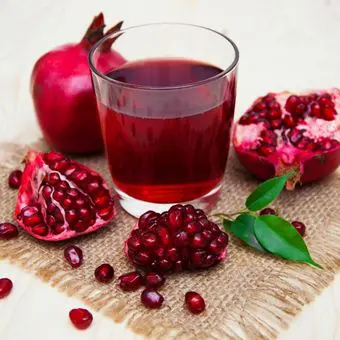
Pomegranate juice. Belief: rich in antioxidants and nitrates, it “boosts blood flow” and thickens the uterine lining.
Reality: no clinical evidence it improves lining or implantation; mostly extrapolation from antioxidant content. Some men’s sperm studies exist, but nothing for endometrial receptivity.
Verdict: harmless-but-unproven; watch the sugar; limit to a small glass (~4 oz).
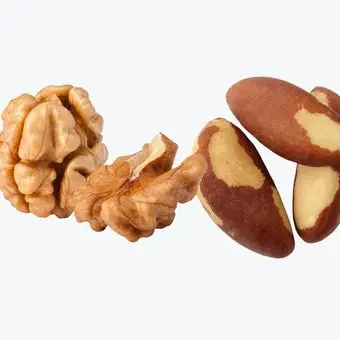
Brazil nuts / walnuts. Belief: selenium supports the uterine lining and egg quality (selenium is a genuine antioxidant important for thyroid and egg health). A Metallomics study found GPX-1 (a selenium-linked protein) higher in women who conceived after single embryo transfer. BUT there’s no evidence eating Brazil nuts in the days after transfer helps implantation, and selenium toxicity is a real risk. Per the NIH Office of Dietary Supplements selenium fact sheet, Brazil nuts contain very high amounts of selenium (68–91 mcg per nut) and could cause toxicity if consumed regularly; the RDA is just 55 mcg/day (National Academies’ Food and Nutrition Board), with a tolerable upper limit of 400 mcg/day. Walnuts are a Kidney “Yang” boosting food in Traditional Chinese Medicine (TCM) and are thought to be helpful for Kidney energy (most important organ for fertility) and for nourishing the brain (they look like little brains!).
Verdict: kernel of real nutritional science, but cap at 1–2 Brazil nuts/day or a half handful of walnuts. Great sources of healthy fats but unproven for the transfer window specifically.
Full-fat / whole milk. Belief: full-fat dairy supports fertility. The origin is legitimate: Chavarro et al.’s Nurses’ Health Study II (Human Reproduction, 2007) found women eating 2+ servings/day of low-fat dairy had an 85% higher risk of anovulatory infertility, while 1+ serving/day of high-fat dairy was linked to ~25% lower risk. BUT this is about ovulation in women trying to conceive naturally — not about implantation after an embryo transfer, where ovulation is irrelevant because the eggs are already retrieved. The EARTH study (2016) found overall dairy linked to higher live birth in IVF but did not confirm the full-fat effect.
Verdict: real study, wrong context. Not relevant to the post-transfer window. However, if you are trying to conceive naturally, opt for full fat dairy products.

Warm socks / warming the feet / “warm feet, warm womb.” Rooted in Traditional Chinese Medicine: a “cold uterus” means poor blood flow, and warm feet supposedly preserve uterine blood flow. Reality: no evidence that foot temperature affects uterine blood flow or implantation. On Fertility Network UK, couples chant “warm feet warm womb” during the two-week wait.
Verdict: pure superstition, but genuinely comforting and harmless — plus clinic rooms are cold, so cozy socks make sense. One caveat: avoid hot water bottles/heating pads directly on the abdomen, and skip hot baths/saunas — overheating is a separate, real concern that you should avoid doing after a transfer.

Lucky socks / charms / pineapple-themed everything. Pure superstition, but positive-thinking value. Harmless — there’s a whole cottage industry of “lucky transfer socks.”
Talking to the embryo / rubbing the belly / “sticky vibes” & “sticky thoughts.” Patients on Fertility Network UK describe talking to their blastocyst and imagining implantation during the two-week wait. Verdict: no biological effect, but a legitimate calming and coping ritual.
Other rituals found in patient communities (Reddit r/IVF, Fertility Network UK, Fertility Friends, TikTok):
- Medical clowning / laughter — actually studied (see relaxation section below).
- Raspberry leaf tea — commonly consumed, but no transfer-window evidence, and it’s best avoided very early as it’s a uterine tonic.
- Castor oil packs on the abdomen — integrative practitioners advise stopping these 1–2 weeks before transfer; not for the two-week wait.
- Bone broth, warm/cooked foods only, avoiding cold or raw foods — TCM-derived “keep the womb warm” eating; harmless.
- The “stack” — many patients combine pineapple + fries + Brazil nuts + pomegranate juice all at once.
- Keeping feet up / propping the hips after transfer — no evidence; the embryo does not fall out.
- “PUPO” (“pregnant until proven otherwise”) mindset, orange foods, not washing hair on transfer day, gentle daily walks as a good-luck routine — assorted superstitions and coping habits.
PART 1.5: The One Ritual With Real Trial Data — Beetroot, Watermelon & Ginger Juice
This one deserves to be pulled out of the “harmless-but-unproven” pile, because unlike fries or pineapple core, it’s actually backed by a real randomized controlled trial, not just a plausible-sounding mechanism.
A 2023 study published in JBRA Assisted Reproduction (Halpern et al.) randomized 436 women undergoing ICSI cycles, 1:3, to either a control group or a group instructed to drink a daily homemade juice of fresh beetroot, watermelon, and ginger, starting the day of embryo transfer and continuing until the pregnancy test. Results, adjusted for confounders (age, BMI, endometrial thickness, number of embryos transferred) using generalized linear models:
- Implantation rate: 25.2% (juice) vs. 20.5% (control), p<0.001
- Clinical pregnancy rate: 41.0% (juice) vs. 22.0% (control), p=0.039
- No significant difference in miscarriage rate between groups
The proposed mechanism is coherent: beetroot is rich in dietary nitrates, which the body converts to nitric oxide — a powerful vasodilator; watermelon is a particularly concentrated source of L-citrulline, which the body recycles into more L-arginine and nitric oxide; and ginger contributes antioxidant and anti-inflammatory compounds. Together, the theory goes, these support better blood flow and vascularization to the endometrium at exactly the window that matters for implantation.
Caveats worth taking seriously: this is a single-centre study from one fertility group in Brazil, and while the randomization and statistical adjustment are genuine strengths, it hasn’t yet been replicated by an independent group. The authors themselves note that nitric oxide’s effects in the body are short-lived (seconds), which makes a “one juice a day” mechanism biologically plausible but still requires more confirmation before it can be called proven.
Verdict: the most evidence-backed of all the “special drink” rituals — worth trying since it’s low-risk and the trial data is real, but stop short of calling it guaranteed.
Looking for the dosages for this juice? Unfortunately, you won’t find them in the original journal article – trust me, I’ve looked. I even emailed the authors personally to see if they would provide the amounts to this apparently fertility boosting drink but I got no reply. However, I wonder if the dosages might look something like the following:
Beetroot: ~140 mL (or ½ cup of beet juice or blended fresh beetroot)
Watermelon: ~500 mL (or ~2 cups of fresh watermelon juice)
Ginger: ~1–2 grams (or ~½ teaspoon of freshly grated ginger)
THIS IS JUST AN EDUCATED GUESS.
PART 2: The Evidence-Based Guidance
Bed rest vs. normal activity — the myth that must die. Multiple systematic reviews agree bed rest does NOT help and may hurt. Craciunas & Tsampras (2016, 4 RCTs, 757 women) found bed rest didn’t improve pregnancy outcomes and actually reduced implantation rate. Cozzolino et al. (2019, 1,002 women) found immediate mobilization caused no harm, concluding “bed rest should not be recommended.” The Cochrane review agrees: no benefit. The leading theory: the stress and anxiety of “protecting” the embryo may do more harm than normal movement. Bottom line: resume gentle activity right away — you cannot make the embryo “fall out.”
Exercise during the two-week wait. Gentle-to-moderate activity (walking, gentle yoga, stretching) is safe and supports mood and blood flow. Avoid high-impact/HIIT, heavy lifting, deep abdominal work, hot yoga, and fall-risk activities. Bottom line: keep moving gently; skip the marathon and the ab workout.
Stress, anxiety & mental health. The research is genuinely mixed. Several studies (Miller 2019, Merari 1992, Taguchi 2015) found no link between stress hormones and outcomes, while others (Csemiczky 2000, a 2014 meta-analysis) found higher anxiety associated with lower conception. Bottom line: don’t add “stress about being stressed.” Everyday stress is normal and unlikely to sabotage your cycle — but managing it genuinely improves your wellbeing.
Relaxation & mind-body interventions — the strongest actionable home lever. Domar’s landmark RCT (2011, 143 women) found mind/body program participants had a 52% pregnancy rate by cycle 2, vs. 20% for controls. A 2022 meta-analysis confirmed mind-body work and CBT significantly improve pregnancy rates. A medical-clowning RCT found a striking effect (36.4% vs 20.2%), though it was quasi-randomized. Music therapy RCTs, by contrast, mostly show anxiety relief without a pregnancy-rate benefit. Bottom line: mind-body programs, CBT, and relaxation are the best-supported home interventions — strongest for wellbeing, with mixed but real signal for pregnancy rates. The most dramatic results come from the weakest study designs, so hold the biggest numbers loosely.
Supplements — timing matters enormously.
- Start months before: CoQ10, DHEA, and melatonin need the ~90-day egg-maturation window to work — they do nothing started at transfer.
- NAC: Evidence is mixed and mostly about egg quality, not the transfer window — one study improved blastocyst quality but not pregnancy rate. Best started before/during stimulation. (See the separate RPL callout below for a different use case.)
- Vitamin D: A 2025 meta-analysis found deficiency significantly reduced clinical pregnancy odds. Get your level checked and corrected.
- Folate: Non-negotiable — start 3+ months before conception.
- Choline: Matters for fetal brain development once pregnant, not for implantation. Aim for 450mg/day, rising in the third trimester — most women fall well short from diet alone.
- Bottom line: the peri-transfer window is too late for egg-quality supplements. Vitamin D and folate matter now; choline matters once pregnant. Always disclose supplements to your clinic.
If you have a history of recurrent pregnancy loss — a different NAC use case. A 2008 study in 166 women with unexplained RPL found NAC 600mg + folic acid, started after a positive pregnancy test and continued to 20 weeks, roughly doubled the rate of ongoing pregnancy (72.5% vs 51.2%) and live birth (56.3% vs 37.2%) versus folic acid alone. Promising, but it’s a non-randomized, single-center, 2008 study that hasn’t been confirmed since — worth raising with your doctor if RPL is part of your history, not something to start alone.
Foods to avoid. Mostly general early-pregnancy precautions, not transfer-specific: keep alcohol out (one meta-analysis linked >84g/week to lower pregnancy rates), caffeine under 200mg/day (moderate caffeine itself showed no harm), and avoid raw/undercooked proteins, high-mercury fish, and unpasteurized dairy.
Foods that may support implantation. The Mediterranean diet is the standout — Karayiannis et al. (2018) found the highest-adherence group had significantly higher clinical pregnancy (50.0% vs 29.1%) and live birth (48.8% vs 26.6%) than the lowest. Findings aren’t universal, but the anti-inflammatory, nutrient-rich mechanism is sound. Bottom line: adopt a Mediterranean pattern, ideally months ahead.
Sleep quality. A 2022 study of 3,183 women linked good sleep quality to higher clinical pregnancy and live birth; a 2025 meta-analysis (9,902 women) confirmed sleep disturbance is associated with worse outcomes. Bottom line: aim for consistent, good-quality 7–8 hours.
Sexual activity/intercourse. Most clinics precautionarily advise avoiding orgasm for 1–2 weeks post-transfer (uterine contractions, disrupted cervical mucus barrier). Evidence is limited and mixed. Bottom line: follow your clinic’s guidance; when in doubt, hold off for the first week.
Acupuncture (covered fully in our separate article). Evidence is mixed — benefits over no treatment, but not clearly over sham acupuncture, suggesting a real relaxation component. Bottom line: good for comfort; not a proven implantation booster on its own.
Recommendations
Do these (highest value):
- Resume gentle normal activity immediately — no bed rest. Walk daily; do gentle yoga or stretching.
- Prioritize stress management and wellbeing — a structured mind-body program, CBT, mindfulness, deep breathing, or guided relaxation. Laughter genuinely helps you cope.
- Eat a Mediterranean/anti-inflammatory diet, started ideally months before.
- Get vitamin D checked and corrected, and take folate. Disclose all supplements to your clinic.
- Protect your sleep — consistent ~7–8 hours.
- Abstain from alcohol; keep caffeine under 200 mg/day (about one 12-oz coffee).
- Follow early-pregnancy food-safety precautions — avoid raw/undercooked proteins, high-mercury fish, and unpasteurized dairy.
- Once pregnancy is confirmed, make sure you’re getting enough choline (450 mg/day, more in the third trimester) — for fetal brain development, not implantation itself.
Worth trying (promising but preliminary): a daily beetroot, watermelon, and ginger juice from transfer day to pregnancy test — the strongest trial data of any of the “special drink” rituals.
Do these if they bring you comfort (harmless, unproven): pineapple core, fries, warm socks, pomegranate juice, Brazil nuts (max 1–2/day), lucky charms, talking to your embryo, the “PUPO” mindset.
Skip or avoid: strict bed rest, total inactivity, intense/high-impact exercise and deep abdominal work, hot tubs/saunas/hot yoga, heating pads or hot water bottles on the abdomen, castor oil packs (stop before transfer), starting egg-quality supplements (CoQ10/DHEA/melatonin) only now (too late), overdoing Brazil nuts, and — as a precaution — orgasm/intercourse in the first days after transfer.
Thresholds that change the advice: If you had OHSS risk or symptoms after retrieval, salty/high-protein foods and fluids genuinely matter (this is the real science behind the fries myth — but it applies to a retrieval, not a transfer). If you have PCOS, myo-inositol and a low-glycemic Mediterranean diet are more strongly indicated. If you have diminished ovarian reserve, discuss CoQ10/DHEA with your doctor — but months before, not at transfer. If you have a history of recurrent pregnancy loss, talk to your doctor about NAC once you have a positive test — this is a distinct situation from general implantation support.
Caveats
- Much of the “what to do after transfer” advice is precautionary and low-certainty; the embryo is far more resilient and protected than folklore implies.
- Many positive studies are small, observational, or use weaker designs (quasi-randomized, case-control, prospective-but-not-randomized); the most dramatic claims (clowning, hypnosis, the RPL/NAC study) come from the least rigorous designs, while rigorous RCTs (e.g., music) show wellbeing benefits more than pregnancy benefits.
- Supplement and diet studies often measure surrogate outcomes (embryo yield, lining thickness) rather than live birth, and results are frequently mixed.
- Nothing here replaces your own clinic’s specific protocol — always follow their guidance, especially on supplements (drug interactions) and activity restrictions.
- Correlation isn’t causation: healthier people tend to sleep better, eat better, and feel less stressed — which may explain some associations independent of any direct effect on implantation.
My Take
Emotions run high during this process, and that’s completely understandable — you’re doing everything you can to give this the best possible shot. That instinct is a good one. But there’s a line where it stops helping.
I see it often: someone becomes so focused on doing everything perfectly that the process itself becomes another source of stress. Missed a supplement by twenty minutes. Ate the “wrong” thing at dinner. Forgot the fries. If you find yourself lying awake at night replaying small decisions like these, second-guessing whether you did enough — that’s worth paying attention to, not brushing off.
Here’s the honest truth: none of the folklore in this article is going to make or break your outcome. And even most of the evidence-based items here move the needle only modestly. The single biggest thing within your control isn’t a supplement schedule or a specific juice — it’s how you’re carrying the emotional weight of this whole process.
If you notice that weight becoming too heavy — if the checklist has started to feel less like preparation and more like a source of anxiety — please talk to someone. A therapist, a counselor, or ask your fertility clinic directly whether they have mental health support available; many do, and it’s there to be used. Reducing stress is genuinely one of the things I care most about helping my patients with throughout this process, and if I notice someone fixating on the small stuff, that’s usually my cue to gently redirect the conversation toward how they’re actually doing.
Acupuncture is one tool I’d encourage you to consider as part of that bigger picture — not as another item to perfect, but as genuine, structured support around this process. If you want to know more about how I approach acupuncture specifically before and after transfer, I’ve written about that in detail here: Pre and Post Transfer Acupuncture
Whatever you decide to do from everything above — do it because it feels right to you, not because you’re afraid of what happens if you don’t.